Westmount FAFO
Westmount FAFO is my open platform for facts, analyses, and context.
It’s a place where residents can see my full answers to public questions, review key issues, and form their own opinions.
Facts. Answers. Find Out.
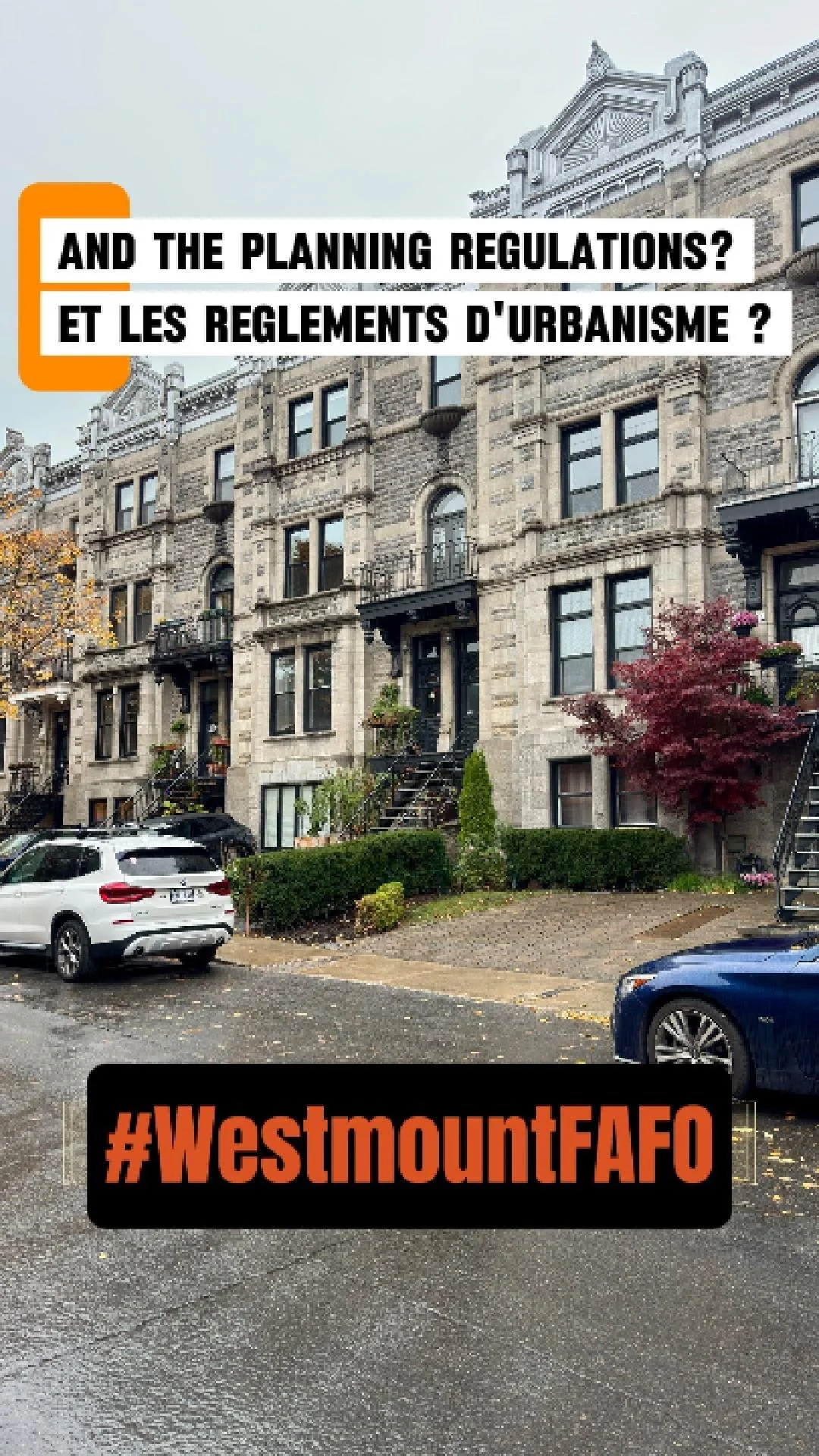
FAFO 12 : Modernizing Westmount’s Planning Framework
Cities evolve through by-laws. Each revision reflects an adjustment to new realities, technologies, and expectations. The rules that govern construction, land use, and public space shape not only what gets built, but how a community lives and changes over time.
Over the past few years, Westmount has undertaken the most sustained regulatory renewal in decades. From zoning and demolition to heritage protection, tree planting, and noise control, nearly every tool that shapes how the city grows and changes has been updated, restructured, or created from scratch. Some by-laws were refined to address gaps or inconsistencies. Others were completely overhauled to reflect contemporary standards and practices.
This work was made possible by dedicating resources specifically to policy reform, allowing the Urban Planning Department to balance day-to-day permit review with long-term regulatory coherence. It required coordination across departments, legal review, and careful attention to how individual by-laws interact as a system. Much of this work happens behind the scenes, but its impact is felt in every permit issued and every project reviewed. The result is a framework that is clearer, more consistent, and better aligned with how the city actually functions.
Heritage conservation remains central to Westmount's identity. The city is the steward of a collective architectural and landscape legacy. But stewardship also means adaptation. Buildings must continue to serve the people who live and work within them. Regulations must allow for maintenance, improvement, and intelligent intervention. The goal is not to preserve the city in amber, but to enable thoughtful evolution that honours what already exists while accommodating what comes next.
What you see here represents significant progress. Years of technical work, legal drafting, and regulatory refinement. But modernization is not a single project with a fixed endpoint. It is an ongoing commitment to maintaining planning tools that are coherent, relevant, and responsive to the community they serve. This chapter is complete. The work continues.
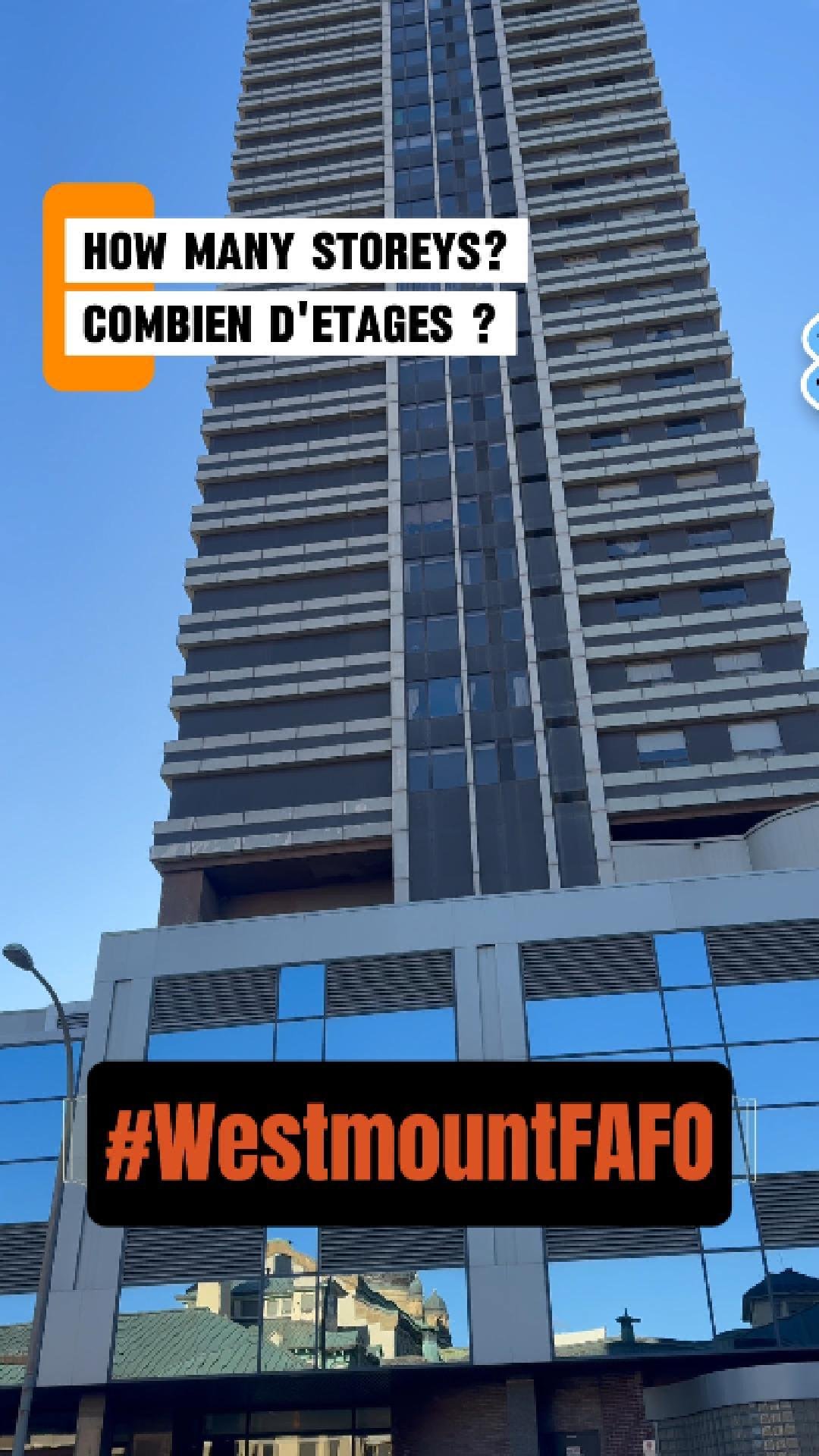
FAFO 11 : Ste-Catherine: Look Up. Height Is Already There.
The newly adopted Southeast Sector Special Planning Programme risks repeating past mistakes rather than learning from them. What this area needs is not simply more development, but smarter development.
The north side of Ste-Catherine, between Greene and Atwater, already defines the skyline of the Southeast Sector. Eight high-rises stand there today, ranging from 16 to 33 storeys, or 63 to 95 metres in height. Their presence demonstrates that the neighborhood can absorb height when properly planned. The real challenge is not whether to build tall, but how to manage height responsibly, coherently, and fairly.
The Southeast Sector SPP, adopted on September 18, proposes four new towers on the south side of the same street, each 20 storeys and up to 66 metres, rising from a three-storey podium. The intent was to calibrate a balance across Ste-Catherine. Yet the result risks crowding too many towers too close together and giving unequal development potential to property owners on the same block.
Revitalization calls for design intelligence, not simply more towers. Two taller, wider, better-spaced towers could achieve stronger results architecturally, economically, and socially than four undersized ones competing for views and sunlight. Greater height allows the building form to optimize the allowable floor area ratio and can be a catalyst for better design, better housing unit diversity, and more attractive real estate. Stronger architectural presence would signal genuine transformation rather than incremental densification.
The Southeast Sector cannot remain as it is. Years of decay and disinvestment have left it stagnant and underperforming. This is not the time to start over, but to improve what has been adopted. The next Council must return to this area early in its mandate, not to reverse course, but to refine the vision into something worthy of one of Westmount's most visible corridors. Done right, this sector could become a model of graceful urban evolution. Done poorly, it will be another missed opportunity.
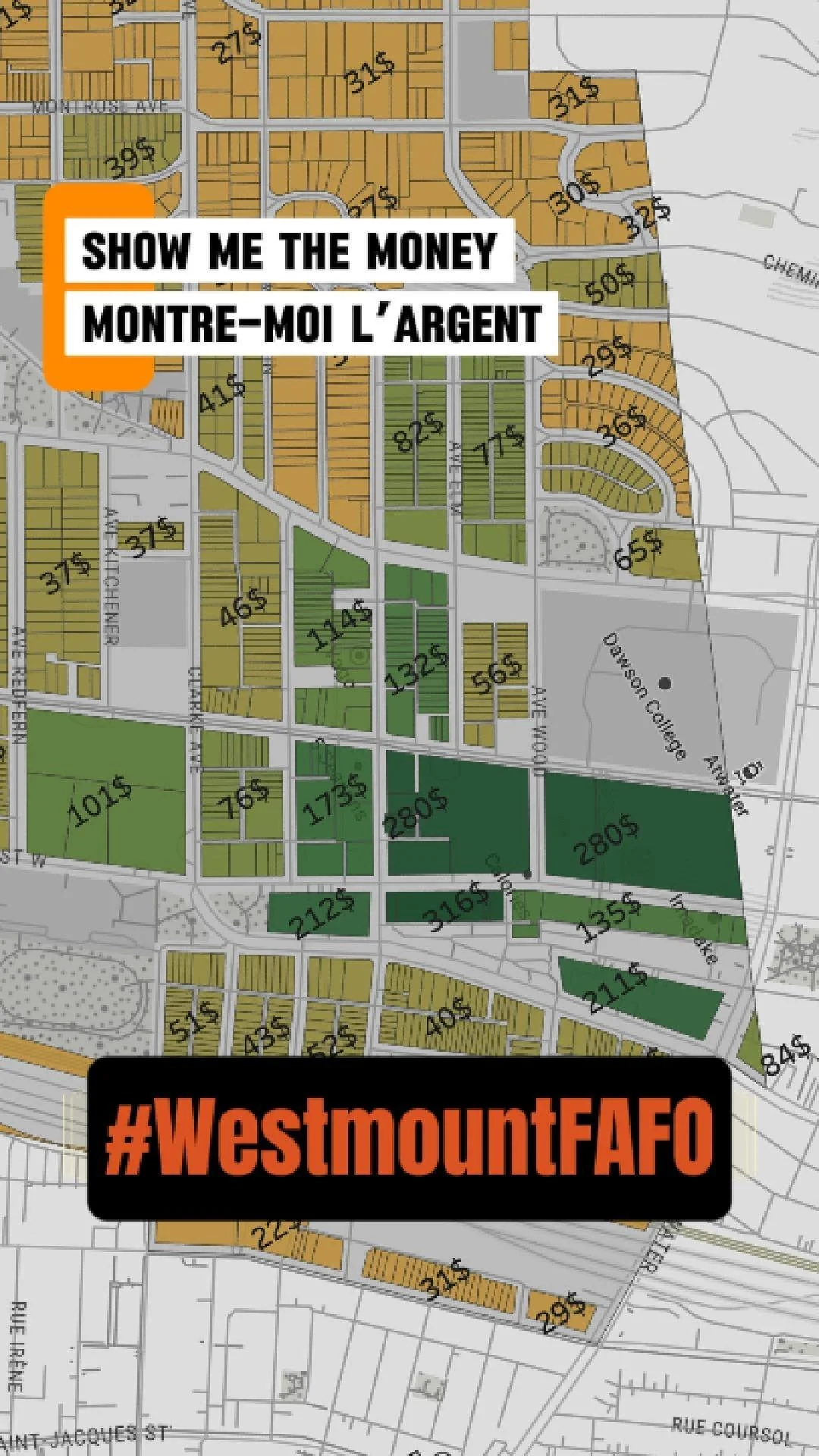
FAFO 10 : Show Me the Money
Westmount’s 2025 budget totals about $137 million. Of that, roughly 79% comes from property taxes, 9% from duties on property transfers, and 3% from payments in lieu of taxes. In all, more than 90% of our annual revenue depends on real estate.
That makes us unique. With less than ten percent of income coming from permits, parking, or user fees, the City functions like a land-based portfolio. Our returns are tied to the value of property, not mainly to our daily work at City Hall. It means that changes in land use and built form matter more to our financial health than almost anything else.
When we look at tax productivity — the amount of property tax generated per square metre of land — an interesting pattern appears. Interactive data map, via Tableau. The most expensive properties on the slope, with their large lots and sweeping views, are not always the most productive. By contrast, the compact and walkable blocks of middle and Lower Westmount, filled with row houses, duplexes, and apartments, generate far more value per unit of land. Add a mix of nearby commercial activity, and productivity rises even higher.
These are not rigid rules. There are exceptions in every direction. Some single-family homes are priced so high that they exceed apartment productivity on a per-square-metre basis. Others do not. The same holds true for condominiums, which in Westmount range from $500,000 to $5 million, and single-family homes from $1 million to $25 million. The takeaway is that the money is not always where one might assume.
Still, the pattern is clear enough to learn from. The two blocks north of Ste-Catherine Street, for example, produce 13.5% of the city’s property tax revenue while occupying just 3.3% of its land. That ratio explains why the Southeast Sector, immediately next door, holds such potential. Revitalizing it can strengthen Westmount’s economic base and help sustain the services and infrastructure that define the city’s quality of life.
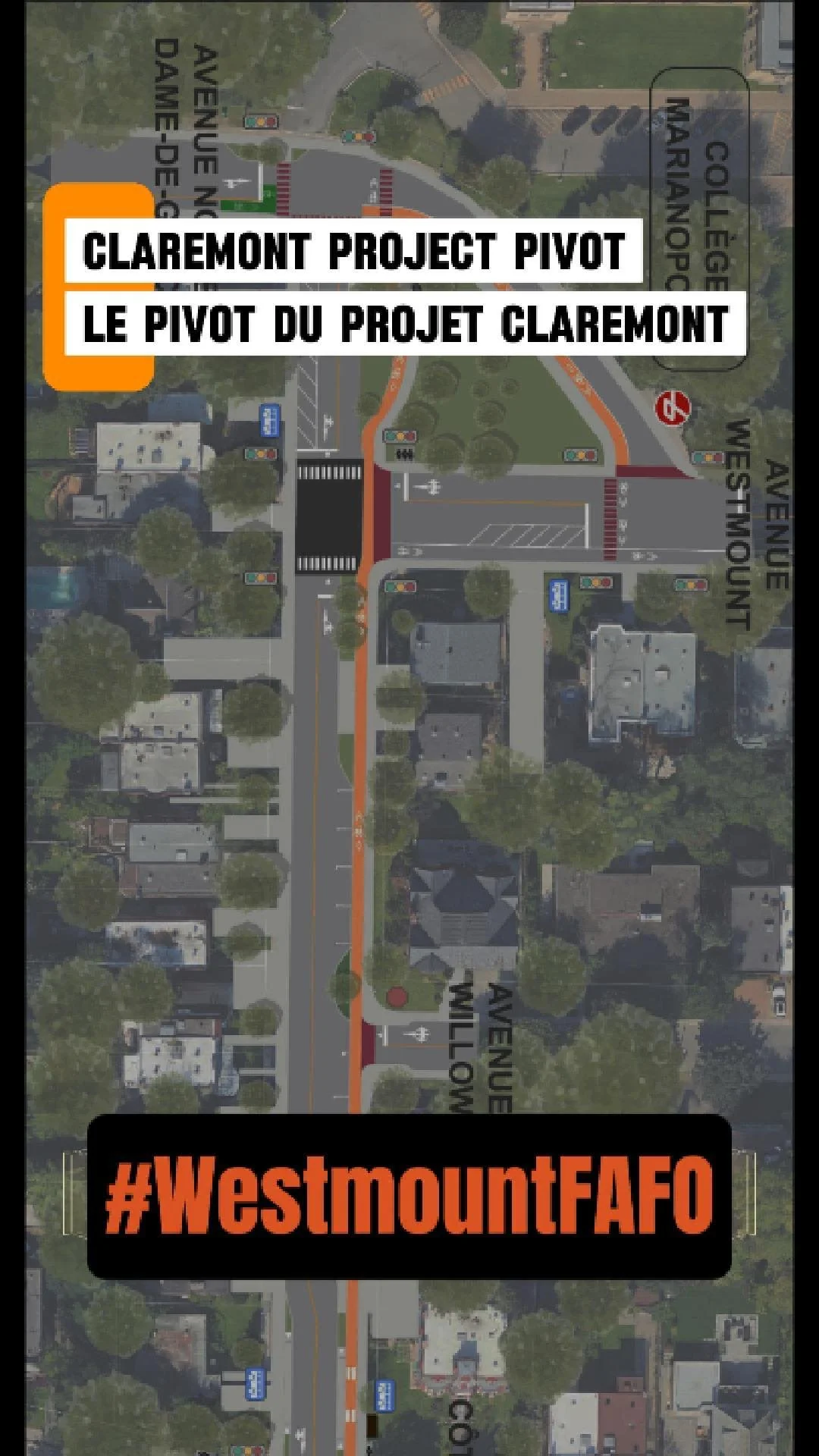
FAFO 09 : Claremont, Derailed, With the Rails Intact
The Claremont Avenue reconstruction was meant to modernize a key corridor from Sherbrooke to NDG, addressing drainage, safety, and accessibility. By early 2025, its budget had quietly ballooned from $6M to $9M.
I later confirmed that Administration knew about the cost overrun before the project went to tender. A special internal meeting was called, but Council only saw the real numbers a week after the tender had been launched.
Around that time, another member of Council questioned the accuracy of the consultant’s public consultation summary. I supported the request for the full, unfiltered resident feedback. The comparison revealed that concerns about parking, traffic, and bike path design had been softened or omitted.
By then, the tender was underway. Council could have borrowed more and pressed ahead. Instead, I argued that we should cancel the call and reassess. Writers are told to kill their darlings. Sometimes elected officials must do the same.
The revised plan scaled back to a rehabilitation project: new sidewalks, resurfacing, and lighting upgrades, while preserving existing geometry and parking. Even without new features, full reconstruction would have cost about $9M. It was the scope of work, not the design choices, that drove the overrun.
Scaling back meant losing critical upgrades: wider sidewalks, safer intersections, narrower and slower streets, and new stormwater management infrastructure. It also meant losing a one-way uphill bike lane, controversial in itself, and preserving on-street parking that would have been removed, even more controversial still. The scale-back also meant a missed opportunity to remove the century-old tramway rails permanently. These losses reduced safety and environmental gains and affected the Lorraine Avenue project at the bottom of the hill, where stormwater management remains the central issue.
The work is now less ambitious but more affordable, bringing costs back near the original $6M allocation and protecting borrowing capacity for other priorities.
Every project involves trade-offs. The goal is not perfection but progress with integrity. That is how we rebuild trust: one project and one lesson at a time.
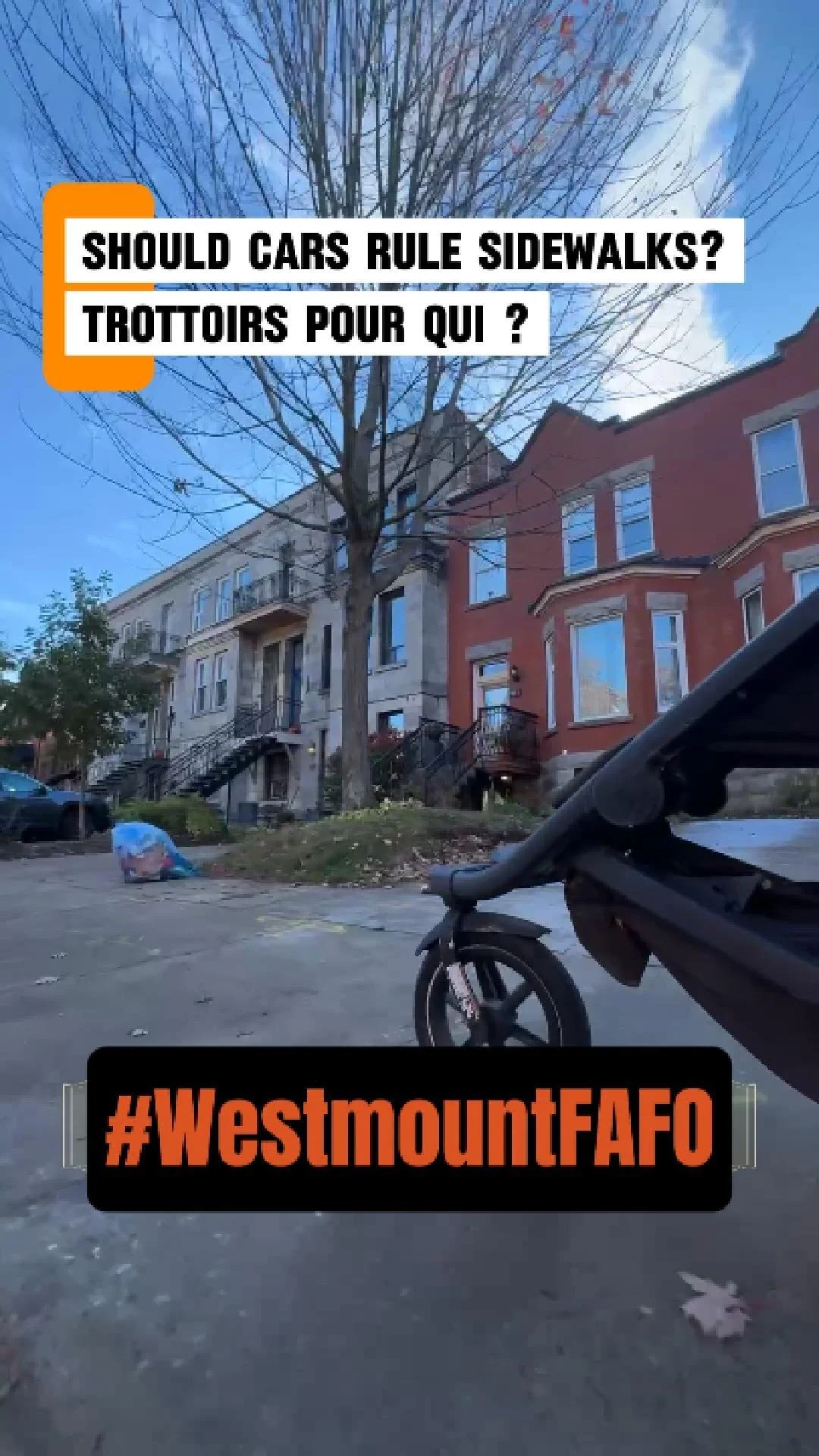
FAFO 08 : Leveling the playing field
Driveways are designed for cars, but sidewalks are for people. In many parts of the city, each driveway cuts into the sidewalk, creating small but frequent slopes that tilt the walking surface. Most of the time, people barely notice. But for anyone pushing a stroller, using a walker, or moving on wheels, these tilts make every few metres an obstacle course. In winter, when surfaces are icy, the cross-slope can even cause wheels to slide toward the street.
During the 2023 Grosvenor reconstruction project, I proposed a small but meaningful change: to make the curb cuts steeper for vehicles so that the sidewalks remain flatter for pedestrians. The adjustment has no effect on drivers — it’s still easy to enter and exit a driveway — but it significantly improves comfort and safety for those walking, rolling, or pushing along the sidewalk.
It’s a simple example of human-scale design: the kind of detail that rarely makes headlines, yet quietly improves daily life. Every decision, however technical, can express what kind of city we want to be.
Small change. Big impact.
That’s leveling the playing field.
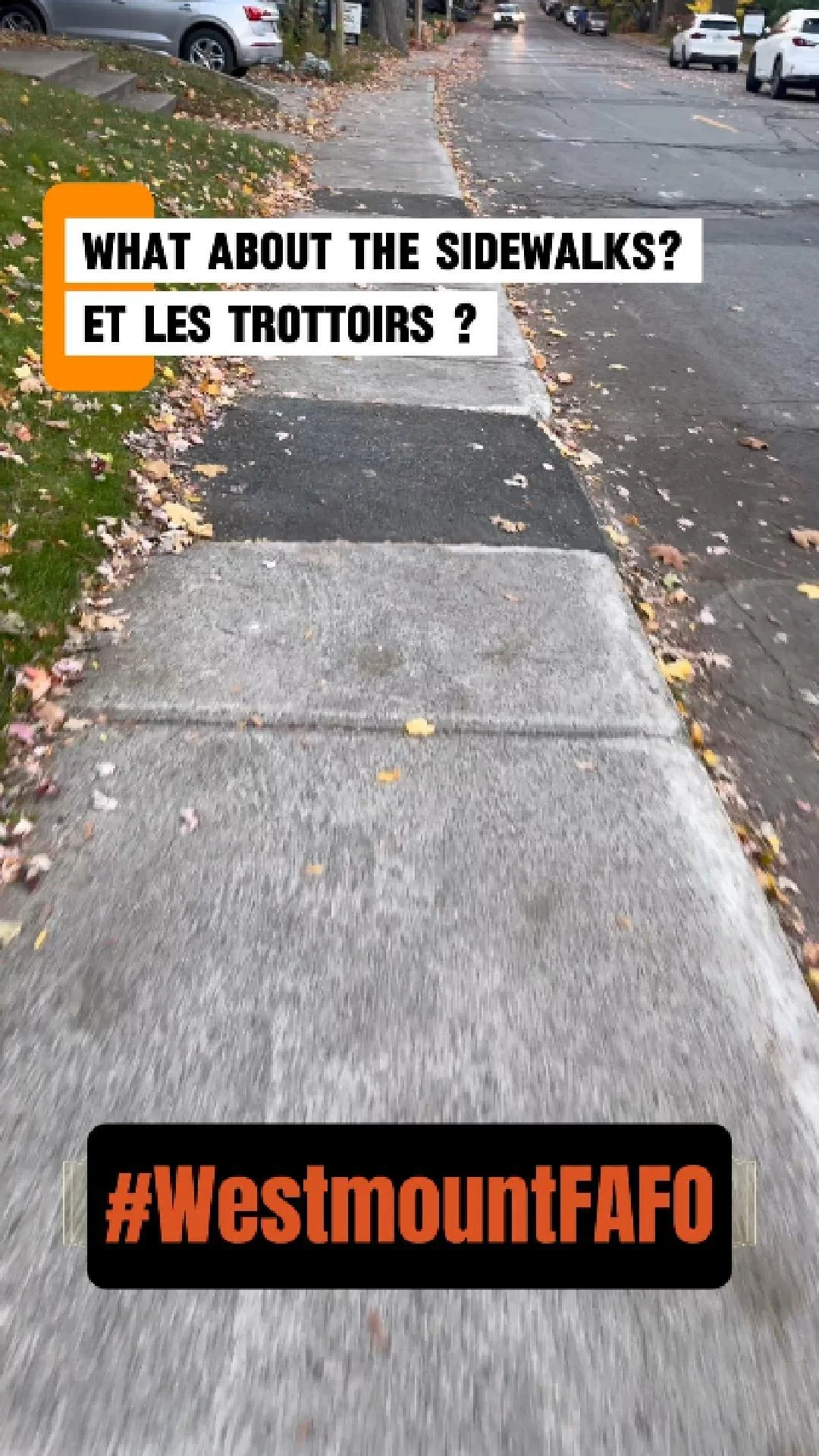
FAFO 07 : Sidewalks Deserve Equal Footing
Sidewalks often play second fiddle to roads. Yet in a compact, walkable city like Westmount, they should share equal footing. Streets are resurfaced regularly based on condition scans completed every few years. Until recently, sidewalks were treated differently.
In 2024, at my initiative, the City commissioned its first-ever comprehensive sidewalk condition scan. The work was carried out by StreetScan, a firm that uses scooter-mounted sensors to record and classify surface defects such as cracks, heaving, and uneven joints.
This new dataset gives us a clear, objective picture of the state of our sidewalks across Westmount. It identifies which blocks need repair or replacement, and helps ensure that maintenance resources are allocated fairly and transparently.
Good sidewalks are not a luxury. They are the foundation of accessibility, safety, and walkability. For children, seniors, and residents with reduced mobility, a smooth and continuous sidewalk is as essential as a well-paved street.
The goal is simple: to use real data to make better decisions, and to bring our pedestrian infrastructure up to the standard our community expects.
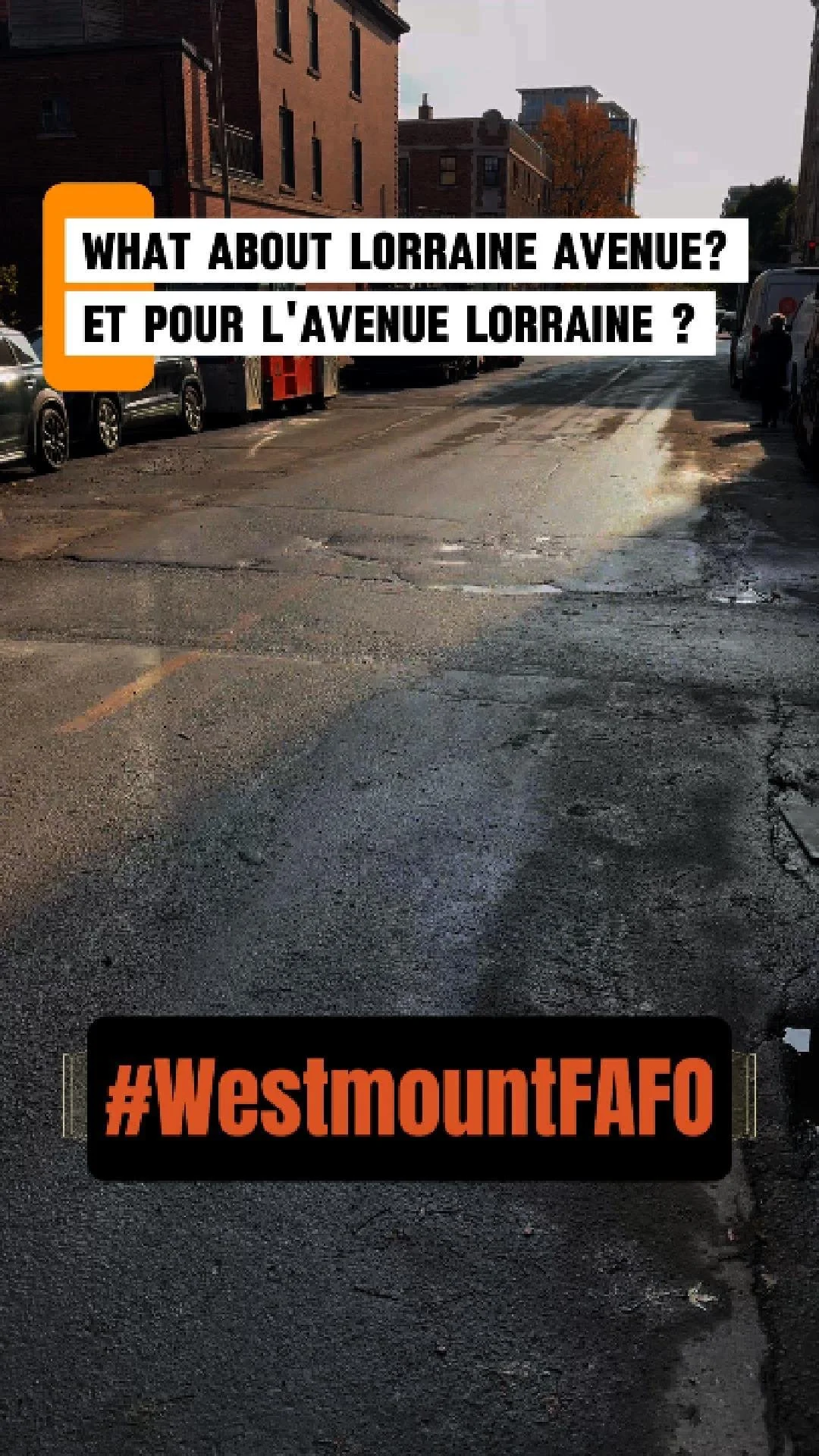
FAFO 06 : What Were We Thinking with Lorraine Ave?
The Claremont Avenue rehabilitation is nearing completion. This year’s work involved targeted base repairs, new asphalt paving, and replacement of sidewalks on both sides.
The only remaining section, the short lower block and adjoining Lorraine Avenue, was intentionally deferred to next year. Once Council opted to return to a conventional rehabilitation rather than the earlier full reconstruction concept, the project’s stormwater design had to be revised. That work is necessary to address long-standing flooding issues at the bottom of the hill on Lorraine Avenue, a cul-de-sac that has faced recurring surface water problems for years.
As with every major project, there are tradeoffs. Council could either complete most of the work this year and finish the remainder next season, or delay the entire project by a full year. Phasing the project over two years allowed visible progress to continue while ensuring that the new drainage system is designed and implemented properly.
This deliberate staging ensures the work proceeds efficiently, addresses chronic flooding, and avoids the higher costs of another year of delay.
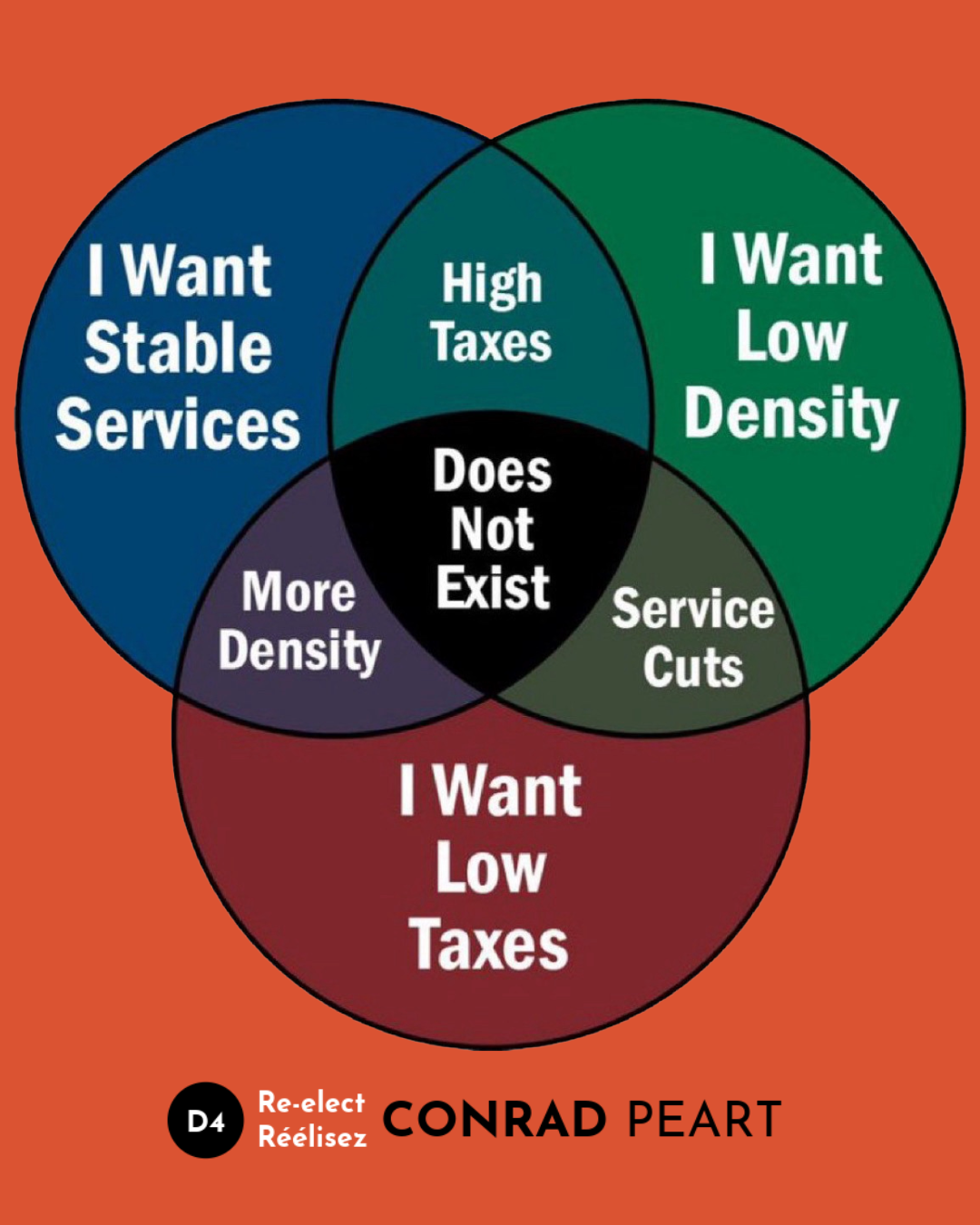
FAFO 05 : Pick Two
You can't have low taxes, low density, and stable services. Pick two.
I've seen questions about Westmount's rising debt and our 2025 Capital Works Programme. After two terms on Council, I've learned that transparency exists, just not always where people expect it.
The full project list is on the City's interactive map.
What's missing are the preliminary cost estimates. The Administration argues that sharing them could affect future tendering. I disagree. I proposed publishing cost ranges ($0–100K, $100–200K, etc.) so residents could grasp project scale without compromising competitive bidding. The proposal was never adopted.
Westmount's infrastructure needs weren't modest. They were neglected. Our Pay-As-You-Go policy created an illusion of restraint while limiting what we could repair or replace. The gap widened each year.
By 2025, our Capital Works Programme reached $39 million covering roads, sewers, buildings, parks, and water mains. These aren't discretionary projects. They're the foundation of daily life.
As capital spending expanded, Council reduced its PAYG share rather than raising revenues to match our needs. In my minority report, I argued for Pay More As You Owe (PMAYO): increase current revenue contributions as debt obligations grow. This keeps borrowing in check and distributes costs fairly across generations.
We cannot hold taxes low, resist development, and expect stable services. A sustainable city requires balance between what we build, what we maintain, and what we can afford.
FAFO 04 : Finding New Revenue Without Raising Taxes
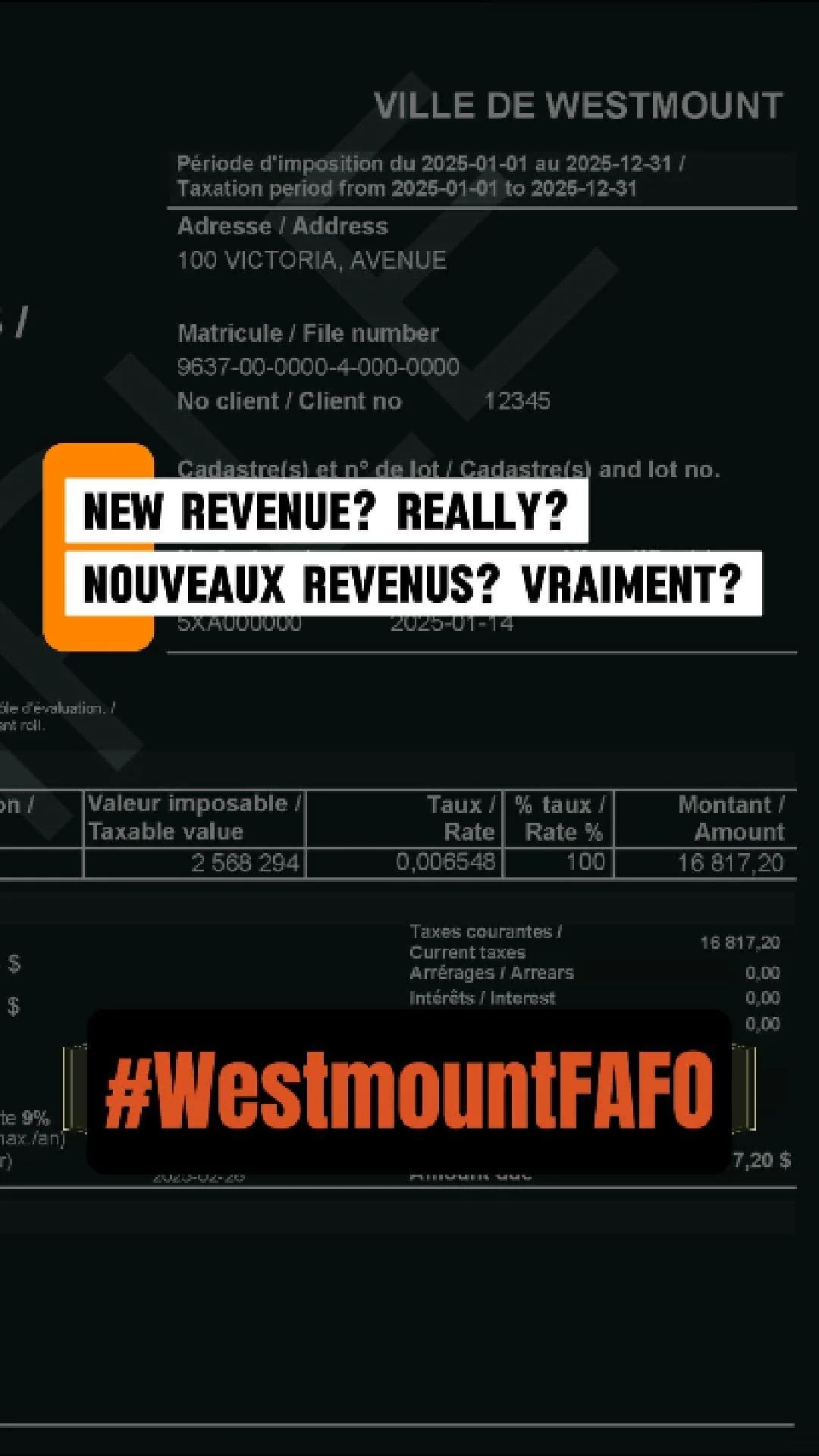
For years, people have talked about finding new sources of revenue for Westmount. I actually found one.
By aligning our real-estate transfer duties with those of neighbouring boroughs, Westmount now generates between one and two million dollars in additional annual revenue. This adjustment brought our rates in line with surrounding communities and corrected a long-standing gap that had quietly cost us millions over time.
The result is simple: more revenue without a tax increase. These new funds help ease pressure on property taxes and soften future rises for homeowners. For a typical single-family home, the impact is equivalent to about 150 to 300 dollars a year in reduced burden.
It is a practical example of how thoughtful policy changes, not big promises, can make a real difference to the city’s finances and to residents’ wallets.
FAFO 03 : Almost half of Westmount rents?
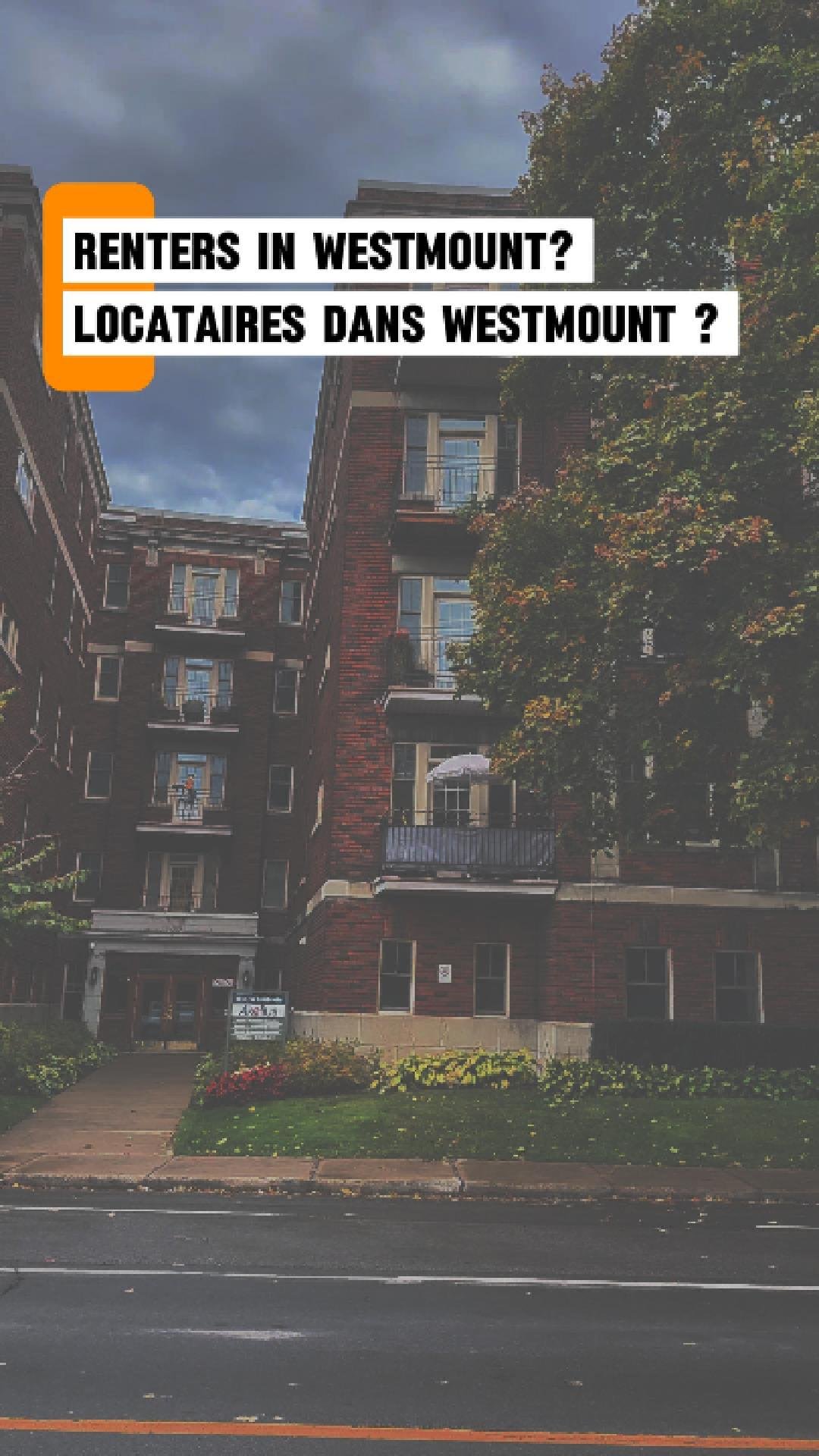
More than 46 percent of Westmounters rent their homes. Thirty-seven percent in District 4, and well over half below Sherbrooke. Renters are an essential part of our community. They pay taxes too, through their rent, and they deserve a fair place in the conversation about housing.
Too often, renters face unequal access to information about the market. That is why I invited Vivre en Ville to present to Council, and why Westmount became the first demerged city to signal its support for a provincial rent registry. Such a registry would make rental histories public, help prevent unfair rent hikes, and give tenants and landlords alike a clear, factual baseline.
Fair rules depend on fair data. Everyone deserves equal information.
FAFO 02 : How dense is Westmount, really?
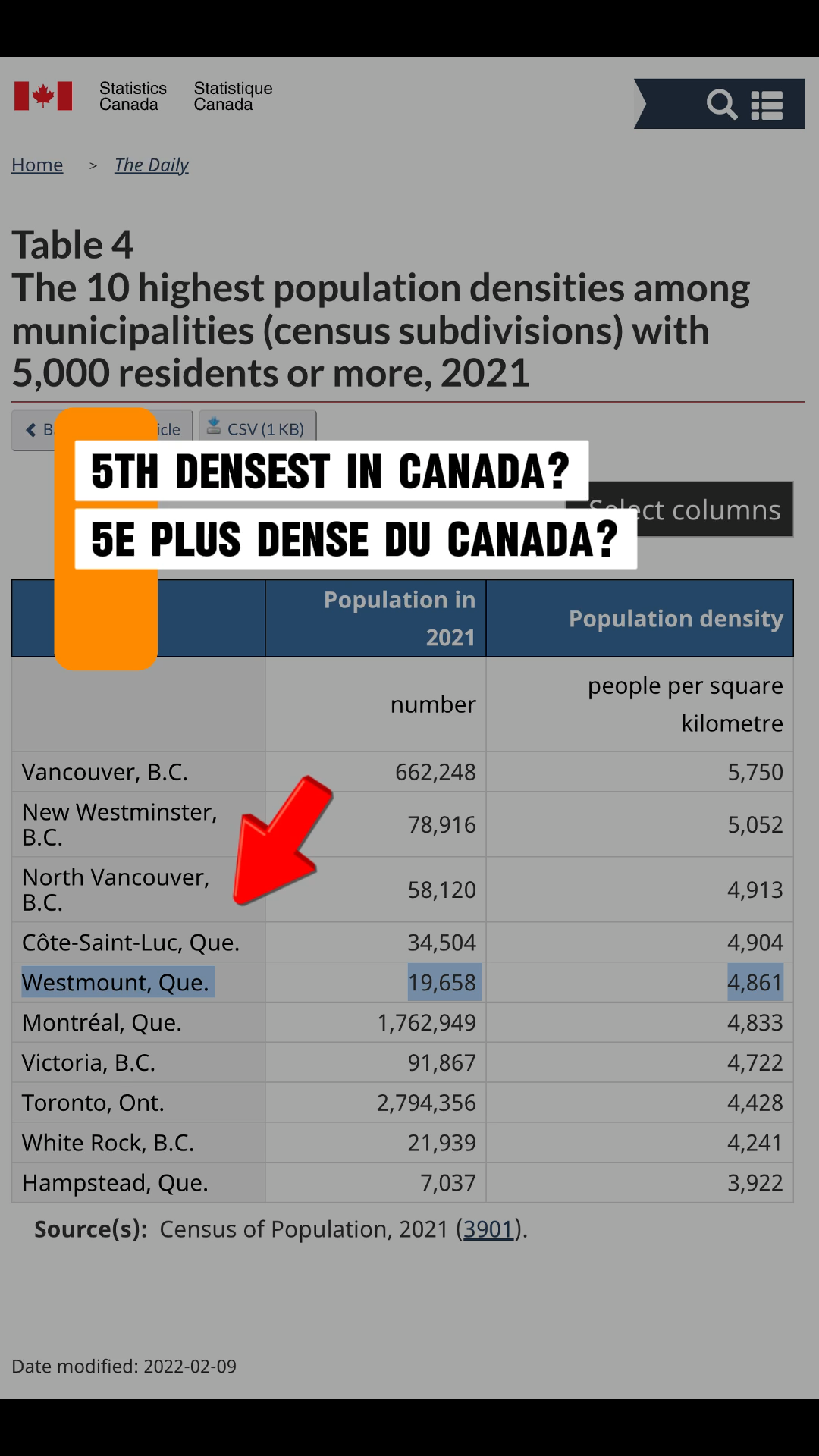
Every few years, a national ranking makes the rounds showing Westmount as one of the densest "cities" in Canada. The numbers come from Statistics Canada, and they're technically accurate. But they don't tell the whole story.
The ranking treats Westmount, Côte-Saint-Luc, Hampstead, and Mont-Royal as standalone municipalities, even though they're woven into the same urban fabric as Montreal's boroughs. In most other parts of Canada, these would just be neighborhoods within one city.
When we compare Westmount to its actual neighbors (the boroughs and demerged cities that make up the Montreal Agglomeration), the picture shifts. Westmount comes in 16th out of 34 for population density. Not first. Not even in the top five. Right in the middle.
And that's perfectly fine. It shows our neighborhood fits right in with Montreal's older districts: compact, walkable, already built up. It also means when we're talking about density, growth, or planning for the future, we should be working from the real picture, not a distorted one.
FAFO 01 : Why keep the rails on Claremont?
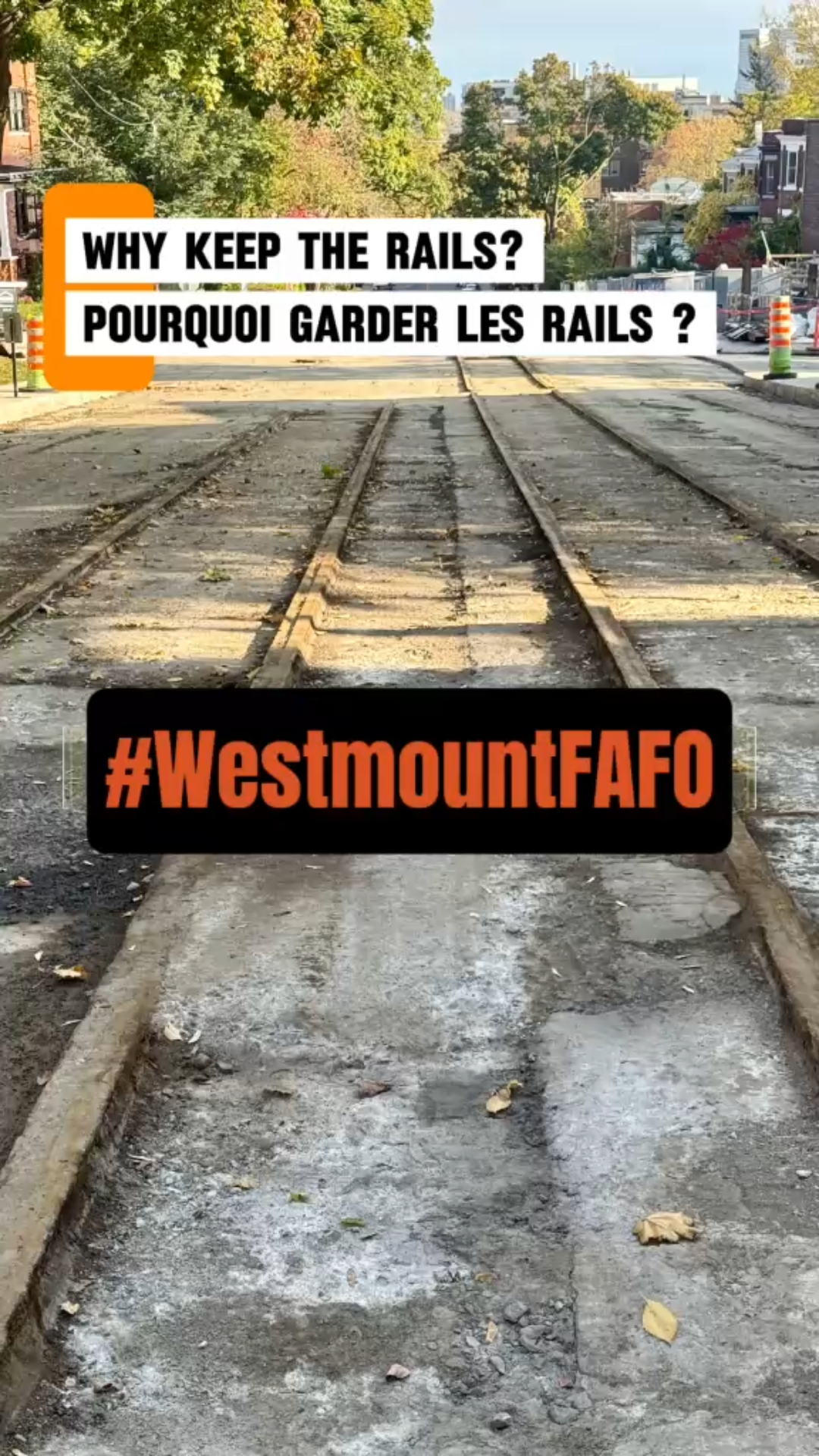
The rails are not ideal, but removing them would be worse. They sit deep within a century of layered road construction. Extracting them would mean tearing out the entire street structure, increasing costs, time, and risk. Engineering analysis shows they do not weaken the new asphalt surface, and reconstructing the road around them costs less than starting over. This approach balances practicality, safety, and budget. It reflects the kinds of tradeoffs the City must weigh when rebuilding aging infrastructure.
Tuesday, October 21, 2025
All candidates were invited by the Westmount Independent to complete a written questionnaire. My responses to Questions 9 and 12d were identified by the paper as being in the “wrong format.” For transparency, I’ve reproduced all of my answers here exactly as submitted so readers can judge for themselves.
Westmount Independent : Questionnaire
A. TEXT QUESTIONS
1. Are you working with any other candidates? “Working with” in this context includes endorsing, encouraging (or being encouraged) to run, helping (or being helped) to campaign, and advising (or being advised).
Answer: As an outgoing Councillor, many candidates have initiated meetings with me. A meeting does not imply endorsement.
2. If so, whom?
Answer: All mayoral candidates. Both councillor candidates for District 5.
B. YES/NO QUESTIONS
3. Would you vote to repeal:
a. The southeast plan?
Answer: NO
b. The fireplace ban?
Answer: NO
c. The Summit Woods sometimes-unleashed-dog compromise by-law?
Answer: NO
i. If yes, would you make the new rules less open to dogs?
Answer: N/A
ii. If yes, would you make the new rules more open to dogs?
Answer: N/A
4. When it first comes up for possible extension or renewal, would you replace the current every-other-week-in-winter garbage pick-up with weekly pick-up?
Answer: YNTL (Yes/No/Too-Limiting)
5. Similarly to the question above, when the time comes, would you reinstate the former practice of picking up garbage behind or in the side lanes of some houses?
Answer: NO
6.
a. Are you in favour of an artificial turf soccer field in principle? (e.g. if another level of government funded one entirely, would you place one on municipal land)
Answer: YES
b. Are you in favour of an artificial turf soccer field in the context of Westmount’s current fiscal state? i.e. one fully or partially paid for by the city.
Answer: YNTL (Yes/No/Too-Limiting)
7. Disclosure: This is a self-interested question by the Independent. Are you in favour of re-instating the city’s former, larger budget for ads in the Independent? i.e. $80,000 in 2025 dollars.
Answer: Decline
SHORT ANSWER QUESTIONS
8. When approaching a street re-build (multiple choice),
a. are you generally in favour of simply re-building the street in question as it was? (as is being done right now on Claremont.)
b. Or are you generally in favour of adding bicycle paths and bump-outs, and reducing parking space? (as was initially proposed for Claremont.)
c. some other way (20 words maximum)
Answer: Streets must first meet MTQ standards and engineering requirements, while also addressing safety, mobility, accessibility, and stormwater management objectives.
9. According to Stats Canada, in 2021 Westmount was the fifth most dense city in Canada and second in Quebec, at 4,861 people per square kilometer. By changing zoning laws and allowing new construction, do you intend to make Westmount significantly more dense?
[Format not specified. Presumed within short answer subsection, as per question #8.]
Answer: Question omits context. Westmount is less dense than nearby boroughs Ville-Marie, CDN-NDG, Sud-Ouest, Outremont, and demerged cities like Côte-Saint-Luc.
10. If so, what is your target density? (one number answer.)
Answer: N/A
11. If so, would (multiple choice):
(a) all of Westmount be targetted for more residents, or
(b) only the area below Sherbrooke?
Answer: N/A
12A. Are you generally in favour of an indoor pool?
Answer: YES
12. Are you generally in favour of an indoor pool in this upcoming mandate, in the context of Westmount’s current fiscal state?
Answer: YNTL (Yes/No/Too-Limiting)
a. If so, where? (20 words maximum)
Answer: (If pursued) Site to be determined by feasibility and partnership studies, with community input and full financial analysis.
b. If so, do you see it as a (multiple choice):
i. City-of-Westmount-only project, for its own use only?
ii. Shared project with another entities or entities?
iii. A project partially financed by pre-leasing large blocks of time to other entities for years to come?
iv. Don’t care which of i to iii?
v. Financed or achieved some other way? If so, how? (20 words maximum)
Answer: (If pursued) IV
c. If you are for an indoor pool, do you see it staffed by city of Westmount personnel? (yes/no)
Answer: YNTL (Yes/No/Too-Limiting)
d. If you are for an indoor pool, do you see it as a facility that is open (multiple choice):
i. All year?
ii. Only during times when the outdoor pool is closed?
iii. Other? (20 words maximum)
Answer: (If pursued) Premature to decide before confirming location, funding, and ownership model.
13. When you vote in the coming mandate, will you be considering the interests, needs and desires of (multiple choice):
a. Current residents only?
b. A mix of current residents and future residents, whose number and identities are currently unknown?
Answer: Decline